
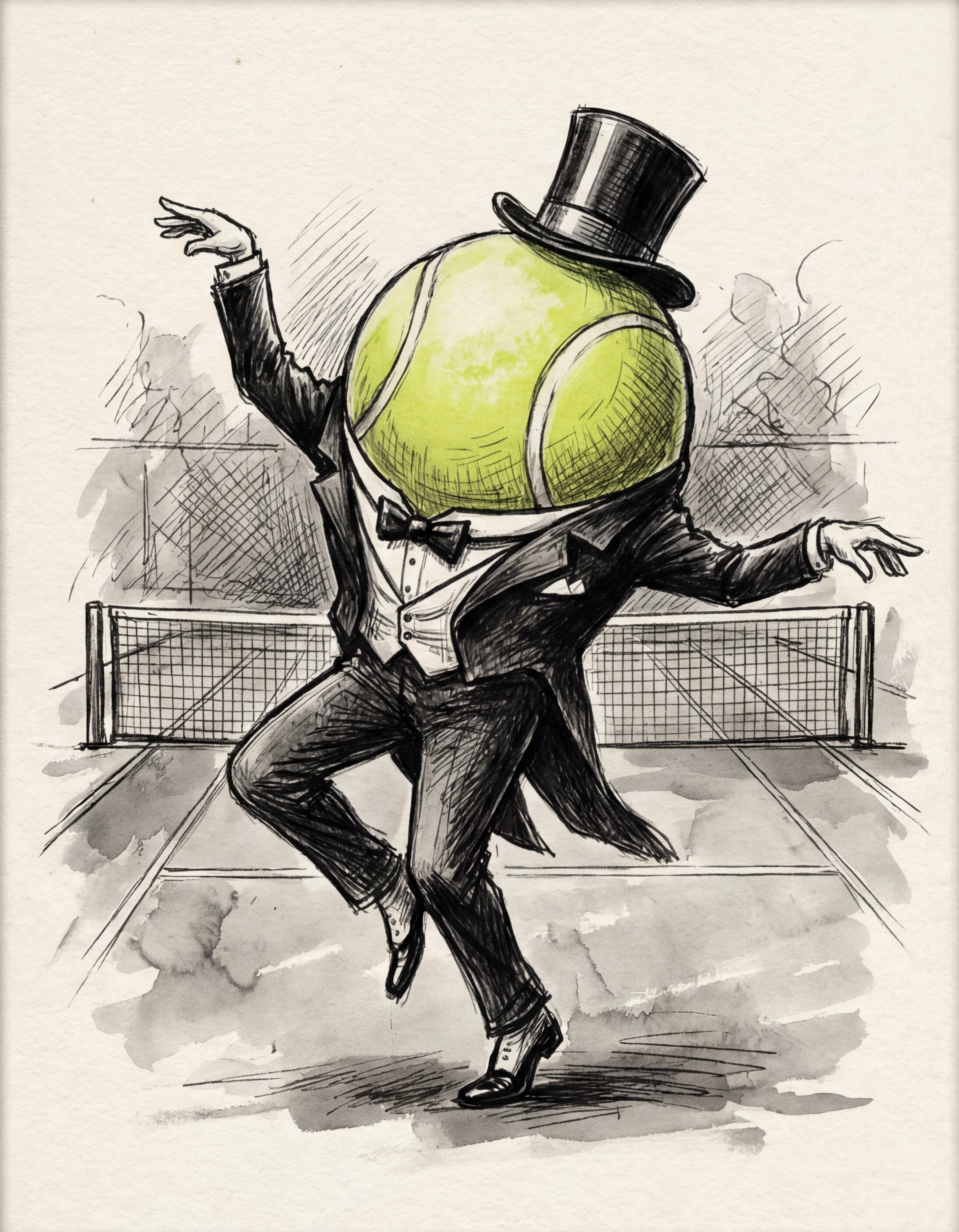
Have you ever felt that you can never quite connect and time the ball well – even after playing for some time now? Perhaps some days feel better than others but you can’t seem to string together consistent feel-good days where striking and timing the ball well is a given (as you would have noticed by watching better players or the pros rallying on Youtube). Is this attributable to the mere lack of practice or simply, a lack of talent? To be clear, both attributes – diligence and talent – are required but certainly not lacking, I believe, for most of us. The key, I have come to realise, is rhythm, or more precisely, syncing up with the ball’s rhythm, of being “one” with the ball.
Regard the tennis ball as your “dance partner” (if it helps, refer to the cover image above to picture your dance companion) and keep in mind these three “mirroring rhythmic” principles as you attempt the following “dance” drills below:
I. Prepare at the height the ball is.
II. Sync with the flight path and speed of the incoming ball.
III. Meet the ball in front.
Drill 1: Solo Ball Throw and Catch
Decide a groundstroke to practice with (forehand or backhand). Throw the ball at varying heights (e.g. High/Medium/Low), and prepare at the height the ball is (i.e. when the ball is high, arm prep must be higher; when the ball is lower, arm prep is lower) and catch it in front of you. It is also vital to remember to activate your whole body (shoulder turn, leg bend, hip turn, etc) when executing the groundstroke. Aim for 15-20 repetitions for each groundstroke.
Drill 2: Ball Throw and Catch-Hit
You would need the help of another person to carry out the next few drills. Again, decide on the groundstrokes to practice on. Get a friend to throw the ball to you from a short distance away with varying heights and speeds, and your job is to prepare at the correct height, sync your take back and swing with the shape of the ball’s flight path (i.e. when the ball dips, your racket dips; when the ball rises after its bounce, your racket rises to meet the ball) and speed profile (i.e. when the approaching ball is fast/slow, take back-and-swing fast or slow accordingly), and meet the ball in front of you – first with your hands and later with your racket. Aim for 15-20 repetitions for each groundstroke.
Do take note that you would have to “calm” your racket face in the take back-and-swing to sync with the flight path and speed of the incoming ball – go either too fast or slow and it would result in you meeting the ball either too early or late. But mistakes are part of success so don’t fret if you fail and simply try again.
Drill 3: Live Rally
Once comfortable, progress to a live rally beginning from the service line and slowly moving back to the baseline. By following the three principles (worth the mention again):
I. Prepare at the height the ball is.
II. Sync with the flight path and speed of the incoming ball.
III. Meet the ball in front.
You should be able to get a good rhythm between your strokes and the ball, and with more intentional practice, hitting with good timing and rhythm would be become easier and a “given” in your tennis sessions.
Enjoyed this article?
Get a FREE printable infographic, “8 Forehand lessons from Federer” for Recreational Players, when you enter your email below and I’ll send it straight to your inbox. You’ll also receive occasional updates whenever I publish a new article and/or release a new resource.
Looking for personalised guidance? I also offer private tennis coaching in Singapore and create digital training resources to help you improve with confidence, both on and off the court.
📩 Subscribe below and stay in the flow.
Leave a Reply